

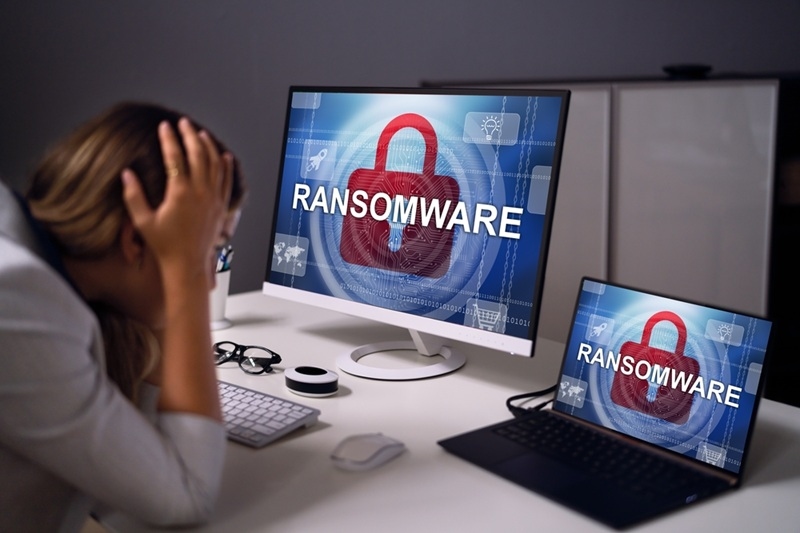
As we enter a period where everything from personal communication to international business processes is driven by digital systems at some level, cybercrime has increased in sophistication, and as of present, the latest trend in the Cyber Crime Industry is Ransomware as a Service (RAAS), which allows those who are not technically knowledgeable to be able to conduct mass Ransomware attacks. Additionally, understanding what Ransomware is, how to define it, and how to protect yourself from this emerging class of Cyber Security Threats will help both individuals and businesses prepare for the exponential increase in Cyber Security Threats.
Ransomware-as-a-service has emerged as a major cybersecurity issue in today’s online landscape; combining the capabilities of well-organized cybercriminal organizations with the ease of access to their tools means they can encrypt your files or lock you out of your system. Attacks that use this method are now far-reaching ransomware campaigns being committed across the world. To remain protected against this ever-evolving form of malware, it is critical to understand both the ransomware definition itself and what ransomware is.
Ransomware may be defined as any type of malware that blocks you from being able to access your computer or data until you pay a ransom in order to unblock access to your computer. These types of attacks may use ransomware to coerce victims into paying a ransom to get their files back and regain access to their systems.
So, if you’re under the impression that ransomware is a type of digital extortion, then you would be correct. Cybercriminals gain access to your network, encrypt your files, and demand a ransom – normally in some form of cryptocurrency – in order to get back your data. Ransomware is becoming increasingly sophisticated and difficult to detect.
Ransomware-as-a-Service is a business model in which developers create malware and lease it to other associates, who then deploy ransomware. The payroll in this case would be on a shared revenue (percentage of the total revenue) between the developer and the affiliate. This business type structure lowers the barrier to entry for cybercriminals.
Don’t Miss This: Cybersecurity Tips to Help Digital Creators Protect Content
The rise of ransomware-as-a-service has significantly increased the frequency and scale of ransomware-related incidents. Both businesses and individuals are subject to these cybersecurity attacks.
For businesses, the impact of a successful ransomware attack can be even worse than halting operations, causing data loss and incurring costly downtime; for individuals, lost data generally means lost files forever.
In addition to encrypting data, today’s malware can also steal it; this creates a double-extortion problem for victims (pay to recover access to files and pay to prevent the stolen data from leaking). In addition to losing access to financial resources, victims may suffer identity theft or reputational harm associated with the attack.
The growth of ransomware-as-a-service is driven by the ability to quickly scale and generate large profits from each successful attack on businesses. Cybercriminals have removed the need for advanced technical expertise to perpetrate a ransomware attack, resulting in more widespread malware use today than ever before.
To avoid ransomware-as-a-service attacks, it is important to take steps early, including these three options. While there are several other preventive measures, they all hinge on awareness of current cybersecurity threats to deter them.
Implement antivirus software, firewalls, and other types of malware protection to reduce your risk of a ransomware attack. Keeping software and hardware patches up to date will reduce the risk of a successful ransomware attack.
Thought You’d Find This Useful: Explore these 5 Cybersecurity Predictions to Watch
Regular backups allow you to restore your data without paying a ransom. Backups are among the most effective ways to defend against ransomware-as-a-service and other cyber threats.
Ransomware is often caused by human error, such as clicking on phishing emails or suspicious links. If users are trained to identify these types of emails, their risk of being impacted by a ransomware attack is reduced.
Adding an additional layer of security to your systems prevents unauthorized access. This reduces the likelihood that malware will successfully be introduced into the system, thereby protecting your sensitive systems.
Monitoring your network for any unusual activity is an essential part of early detection to stop a ransomware attack before it can spread. Continuous network monitoring is essential for combating ransomware-as-a-service.
The emergence of ransomware as a service is converting cybercrime into a scalable and profitable industry. As a result of this evolution in the cybercrime landscape, ransomware attacks have increased. A better understanding of ransomware, the implementation of strong defenses, and a deeper knowledge of evolving cybersecurity threats and malware attacks help individuals and businesses to defend against them effectively.
Ransomware-as-a-service enables cybercriminals to develop attacks without in-depth technical expertise, scale ransomware attack campaigns, and launch widespread malware attacks, creating a greater number of global cybersecurity threats for all organizations/companies/individual users.
Small businesses continue to be frequent victims of ransomware attacks because they often lack strong defense technology. Furthermore, the ransomware-as-a-service platform simplifies launching malware attacks, thereby increasing cybersecurity threats. Cybercriminals believe that smaller businesses will pay quicker than larger enterprises when they are subjected to a ransomware attack.
The healthcare, finance, and education industries are most susceptible to ransomware attacks because they possess sensitive data. Using ransomware as a service enables cybercriminals to launch their ransomware attack campaigns at the same time and create increased cybersecurity threats and malware attacks to industries where the downtime or loss of data has dire consequences.
Paying a ransom for your data does not mean that your data will be recovered, and may make you feel more comfortable about further ransom-type attacks in the future. Experts recommend that people (and companies) should not pay ransom because ransomware-as-a-service operators generally continue to attack computers with their malware, which only increases the cybersecurity threats people face in the future.
When ransomware attacks a company network, it usually occurs very quickly (within a few minutes of the initial attack) and depends on the level of vulnerability the business faces. Ransomware-as-a-service tools have been designed for the purpose of speed and enable large-scale attacks using malware. Therefore, the early detection of ransomware is critical to minimizing the potential cyber security threats and damage caused by malware.
This content was created by AI